


Internet of Things Training
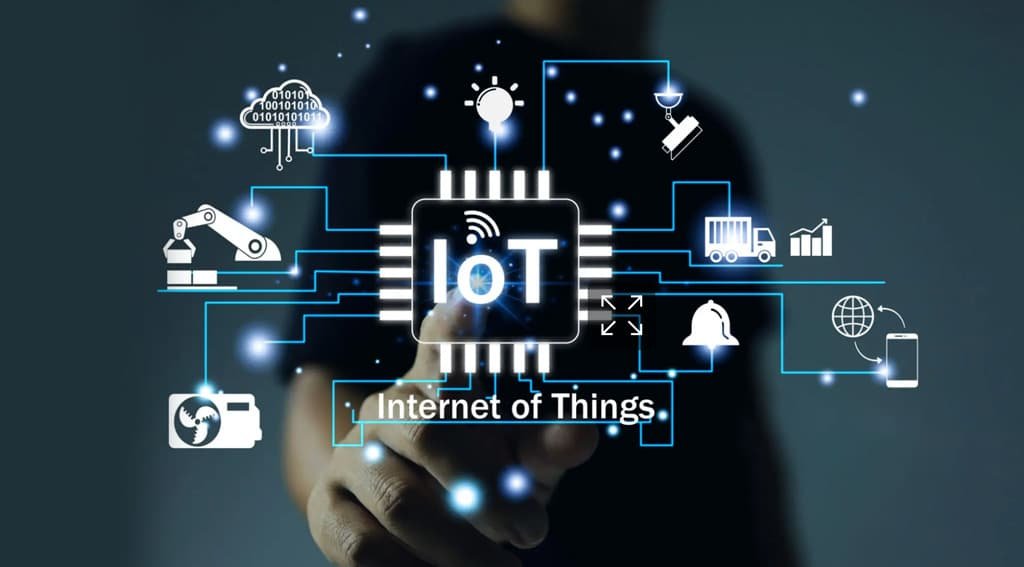
The Internet of Things (IoT) Training Program is a comprehensive, hands-on course designed to provide participants with the skills to build and manage IoT systems. It covers key topics such as sensor integration, data collection, wireless communication protocols, cloud computing, and edge computing. Participants will learn to work with IoT platforms like Arduino, Raspberry Pi, and cloud services such as AWS IoT and Microsoft Azure.
Why Choose Skillairo?
Expert Mentor
Industry Exposure
LMS Access
Talk & Skills
Professional Certificate
Career Support
Programs Overview
The Internet of Things (IoT) Training Program is a comprehensive, hands-on course designed to provide participants with the skills to build and manage IoT systems. It covers key topics such as sensor integration, data collection, wireless communication protocols, cloud computing, and edge computing. Participants will learn to work with IoT platforms like Arduino, Raspberry Pi, and cloud services such as AWS IoT and Microsoft Azure.
Ideal for engineers, developers, and technology enthusiasts, this program offers flexible learning, expert mentorship, and an industry-recognized certification. By the end of the course, participants will be equipped to create innovative IoT solutions and contribute to the rapidly growing IoT industry.
Training Path
Introduction to Internet of Things (IoT)
What is IoT and How Does It Work?
- Components of IoT
- IoT Applications in Various Industries
- IoT Architecture and Communication Protocols
IoT Communication Protocols
- Common IoT Communication Protocols
- Understanding Wireless Communication
- Working with Cellular Networks (4G/5G) and IoT Gateways
- IoT Networks
IoT Security and Privacy
- Common Security Risks in IoT Systems
- IoT Device Authentication and Encryption Techniques
- Securing IoT Networks
- Privacy Concerns and Data Protection Regulations
IoT Analytics and Machine Learning
- Analyzing IoT Data with Statistical Methods and Data Visualization Tools
- Introduction to Machine Learning in IoT
- Using AI and Edge Computing for Real-Time Decision Making
- Tools for IoT Data Analytics
IoT Hardware and Embedded Systems
- Understanding Embedded Systems and Microcontrollers
- Overview of IoT Devices
- Basics of Sensors and Actuators
- Setting Up Development Boards and Connecting Sensors
Data Collection and Storage in IoT
- IoT Data Flow
- Cloud Computing for IoT
- Introduction to Edge Computing and Fog Computing
- Databases for IoT
Building IoT Applications and Systems
- Designing an End-to-End IoT System
- Integrating IoT Devices with Web and Mobile Applications
- IoT Platforms for Application Development
- Real-Time Data Monitoring and Control Systems
IoT Standards, Regulations, and Challenges
- Overview of IoT Standards
- Regulatory Considerations in IoT
- Challenges in IoT Adoption
- Future Trends in IoT
Skills Covered
- IoT Basics
- Sensor Technologies
- Embedded Systems
- Networking Protocols
- IoT Architecture
- Data Acquisition
- Cloud Computing
- IoT Security
- IoT Communication
- Edge Computing
- Data Analytics
- Device Management
Industry Projects
E-commerce Website
Build an online shopping platform with product listings, user authentication, payment gateways, and order management. Focus on a smooth user experience and backend inventory management.
Blog Platform
Create a platform for users to write and publish blog posts, with features like user profiles, commenting, content management, and social sharing. Implement a simple, intuitive interface for authors and readers.
Event Management System
Develop a system for organizing, promoting, and managing events. Include features such as event registration, ticketing, calendar integration, attendee management, and event notifications.
Social Media Platform
Build a platform that allows users to create profiles, post content, follow others, like and comment on posts, and engage in direct messaging. Focus on real-time interactions and scalability.
Restaurant Reservation System
Develop a system that allows customers to book tables, view menus, make reservations, and get notifications. Implement an admin panel for managing bookings and customer details.
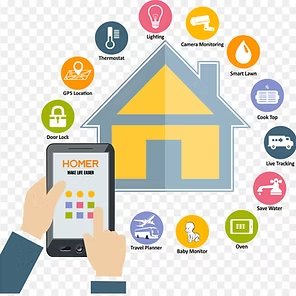
This project involves designing and implementing a Smart Home Automation System that enables users to control and monitor various home appliances and systems remotely. It aims to enhance convenience, security, and energy efficiency through automated functionalities and real-time monitoring. The key component include
1.Remote Device Control Allow users to remotely control appliances such as lights, fans, air conditioners, and kitchen devices via a mobile app or voice commands.
2.Real-Time Monitoring Enable users to monitor home parameters, such as temperature, humidity, energy usage, and security cameras, in real time through sensors and IoT devices.
3.Voice Assistant Integration Integrate with voice assistants like Alexa, Google Assistant, or Siri to execute voice commands for smart home functions.
4.Automated Scheduling Provide scheduling options for devices to automate tasks, such as turning off lights at bedtime or starting the coffee machine in the morning.
5.Energy Management Track energy consumption and provide suggestions for optimizing power usage, helping users reduce their electricity bills.
6.Security Features Include smart locks, motion sensors, and live security camera feeds, with alerts for suspicious activities or unauthorized access.
7.Multi-Device Synchronization Ensure seamless synchronization of multiple devices, allowing them to work together, such as adjusting lights and thermostat settings based on room occupancy.
8.Customizable Scenes and Modes Offer pre-programmed modes like “Away,” “Movie Night,” or “Bedtime,” which adjust multiple devices simultaneously based on user preferences.
9.Mobile Application Control Develop a user-friendly mobile app to manage all devices, set up routines, and receive alerts or notifications.
10.Fail-Safe Mechanisms Incorporate backup systems and fail-safes to ensure critical functionalities, such as security, remain operational during power outages or connectivity issues.
Technologies Raspberry Pi or Arduino, NodeMCU, MQTT protocol, IoT sensors, Wi-Fi modules, mobile app (Flutter/React Native), Python, Firebase (for real-time data), Alexa/Google Assistant APIs, and Zigbee/Z-Wave protocols.
Outcome A comprehensive Smart Home Automation System that enhances convenience, improves energy efficiency, and strengthens home security while allowing users to control and monitor their homes effortlessly from anywhere.

This project involves designing an IoT-based system to monitor and analyze weather conditions in real time. The system collects data such as temperature, humidity, air pressure, and rainfall through sensors and transmits it to a central server for analysis and visualization. The key component include
1.Real-Time Weather Data Collection Use IoT sensors to measure weather parameters, including temperature, humidity, air pressure, and rainfall, with high accuracy.
2.Data Transmission to Cloud Transmit sensor data to a cloud server in real time using communication protocols like MQTT or HTTP over Wi-Fi, GSM, or LoRa.
3.Data Storage and Analysis Store collected data in a cloud database and analyze it to identify trends, patterns, and anomalies in weather conditions.
4.Visualization Dashboard Develop an interactive dashboard for users to visualize weather metrics in real time through graphs, charts, and maps.
5.Mobile and Web Application Provide mobile and web applications for users to monitor weather conditions remotely and receive alerts.
6.Alerts and Notifications Send real-time notifications or alerts to users for specific weather events like heavy rainfall, temperature spikes, or storms.
7.Weather Prediction Implement machine learning models to forecast weather trends based on historical data collected by the system.
8.Energy Efficiency Optimize the power consumption of IoT devices through energy-efficient hardware and power management techniques.
9.Scalability and Multi-Location Support Allow integration of multiple sensor nodes in different locations to monitor weather conditions across a wide area.
10.Offline Data Backup Store sensor readings locally during connectivity loss and synchronize with the cloud once the connection is restored.
Technologies Raspberry Pi or Arduino, DHT11/DHT22 sensors (temperature and humidity), BMP280 sensor (pressure), rain gauge sensor, NodeMCU, MQTT/HTTP protocols, Firebase/AWS IoT Core (for cloud), Python, and dashboard tools like ThingsBoard or Grafana.
Outcome An IoT-based Weather Monitoring System that provides real-time data, analytics, and forecasts, enabling better decision-making for agriculture, disaster management, or daily activities by offering timely weather insights.
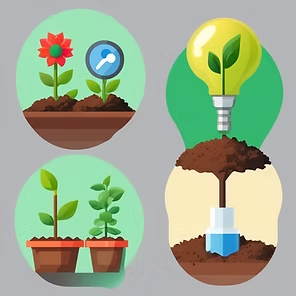
This project focuses on creating a smart agriculture system using IoT and data analytics to monitor and optimize farming processes. The system helps farmers improve crop yield, reduce waste, and make informed decisions by automating and monitoring critical agricultural activities. The key component include
1.Real-Time Environmental Monitoring Use IoT sensors to monitor soil moisture, temperature, humidity, light intensity, and other environmental parameters crucial for crop health.
2.Automated Irrigation System Implement an automated irrigation system that activates based on soil moisture levels and weather conditions to optimize water usage.
3.Crop Health Monitoring Use image processing and computer vision techniques to detect diseases, pests, or nutrient deficiencies in crops.
4.Weather Forecast Integration Integrate weather forecasts to help farmers plan irrigation, fertilization, and harvesting schedules effectively.
5.Fertilizer and Resource Management Provide recommendations for fertilizers, pesticides, and other resources based on soil conditions and crop requirements.
6.Remote Monitoring and Control Enable farmers to monitor field conditions and control devices like irrigation pumps and sprinklers remotely via mobile or web applications.
7.Data Analytics and Insights Analyze historical and real-time data to provide actionable insights, such as identifying patterns or predicting crop yields.
8.Alerts and Notifications Notify farmers about critical conditions, such as extreme weather events, low soil moisture, or pest infestations.
9.Multi-Field and Crop Support Allow monitoring and management of multiple fields or crops within a single platform.
10.Energy Efficiency and Solar Integration Integrate solar-powered IoT devices to ensure energy efficiency and sustainability in remote areas.
Technologies Raspberry Pi or Arduino, soil moisture sensors, DHT11/DHT22 (temperature and humidity sensors), UV and pH sensors, NodeMCU, Python, Firebase/AWS IoT Core, machine learning for predictive analysis, mobile app (Flutter), and dashboard tools like Grafana.
Outcome A comprehensive Smart Agriculture System that enhances productivity, reduces resource wastage, and empowers farmers with real-time data, analytics, and automation to improve decision-making and achieve sustainable farming practices.
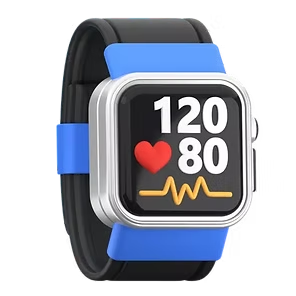
This project focuses on designing a wearable device equipped with sensors to monitor vital health parameters in real time. The device helps users track their fitness, detect early signs of health issues, and promote overall well-being through continuous health monitoring. The key component include
1.Vital Signs Monitoring Track key health metrics such as heart rate, blood pressure, blood oxygen levels (SpO2), body temperature, and respiratory rate using integrated sensors.
2.Fitness and Activity Tracking Monitor daily activities like steps taken, calories burned, distance covered, and active hours to help users achieve their fitness goals.
3.Sleep Pattern Analysis Analyze sleep cycles, including REM, light, and deep sleep stages, and provide insights for improving sleep quality.
4.ECG and Stress Monitoring Include ECG monitoring to detect irregular heart rhythms and stress detection based on heart rate variability (HRV) analysis.
5.Personalized Health Insights Use data analytics to provide personalized insights, such as health trends, fitness progress, and suggestions for improvement.
6.Health Alerts and Notifications Notify users of abnormal health readings, such as elevated heart rate, low SpO2, or irregular ECG patterns, for timely medical intervention.
7.Mobile App Integration Synchronize with a mobile app to visualize health data, set fitness goals, and access detailed reports and analytics.
8.Emergency Alert System Include an SOS feature to send emergency alerts to predefined contacts with the user’s location in case of critical health conditions.
9.Long Battery Life and Water Resistance Ensure extended battery performance and water-resistant design to make the device suitable for daily and outdoor use.
10.Multi-User Support and Data Sharing Enable family members or caregivers to access health data, especially for elderly or chronically ill patients.
Technologies Wearable sensors (PPG for heart rate, SpO2, and ECG), accelerometer, gyroscope, Bluetooth Low Energy (BLE) for connectivity, mobile app (Flutter or React Native), cloud storage (Firebase, AWS), data analytics (Python), and machine learning for predictive health analytics.
Outcome A compact and efficient health monitoring wearable device that empowers users to take proactive measures for their health by providing real-time insights, fitness tracking, and early warnings for potential health risks.

This project focuses on developing a system to track and monitor vehicles in real time using GPS and IoT technologies. The system provides location updates, route history, and performance metrics, ensuring better fleet management and enhanced security for vehicles. The key component include
1.Real-Time Location Tracking Continuously monitor the vehicle’s location using GPS technology and display it on a live map.
2.Route History Playback Maintain a log of the vehicle’s past routes, including timestamps and distances covered, for analysis.
3.Geofencing and Alerts Set virtual boundaries (geofences) and send alerts when a vehicle enters or exits these predefined zones.
4.Speed and Driving Behavior Monitoring Track the vehicle’s speed, detect sudden braking or acceleration, and provide reports on driver behavior.
5.Fuel Usage and Maintenance Alerts Monitor fuel consumption and notify users of maintenance schedules, such as oil changes or tire rotations.
6.Emergency Notifications Send SOS alerts to predefined contacts in case of accidents, breakdowns, or other emergencies.
7.Mobile and Web Integration Provide users with a mobile app and web platform to access vehicle tracking information, reports, and alerts.
8.Data Analytics and Reporting Generate detailed reports on vehicle usage, efficiency, and route optimization to improve fleet management.
9.Multi-Vehicle Tracking Support tracking of multiple vehicles simultaneously, suitable for fleet operators.
10.Secure Data Transmission Ensure encrypted communication between GPS devices, the server, and user interfaces to maintain data security.
Technologies GPS modules, GSM/GPRS modules, microcontrollers (e.g., Arduino, Raspberry Pi), cloud services (AWS IoT, Firebase), mobile app development (Flutter, React Native), web platforms (HTML, JavaScript, Python/Django), and map APIs (Google Maps, Mapbox).
Outcome A robust real-time vehicle tracking system that enhances fleet management, improves operational efficiency, and provides security through continuous monitoring, alerts, and actionable insights.
Certifications
Get certified in Internet Of Things(IoTs) through our program and receive both a Training Completion Certificate and an Internship Completion Certificate. The prestigious Top Performer Certificate is awarded to outstanding students who performed exceptionally well during both the training and internship phases.



Pricing Plan
At SkillAiro, we’re committed to making high-quality education accessible to all. We’ve structured our programs with transparent and competitive pricing to suit a variety of learning needs.
Internet of Things(IOTs) Industry Trends
These trends underscore India’s expanding role in the global Internet of Things(IOTs) landscape, supported by a robust IT industry and a growing pool of skilled professionals.
12.17% Annual Growth Rate

The Internet of Things (IoT) market in India is experiencing rapid growth, valued at USD 1.2 billion in 2023 and projected to reach USD 3.3 billion by 2032, with a CAGR of 12.17% from 2024 to 2032. This expansion is fueled by rising adoption across industries such as healthcare, agriculture, transportation, and manufacturing, along with government initiatives and technological advancements.
The market is segmented into hardware, software, services, and connectivity, with applications spanning smart homes, wearables, smart cities, industrial IoT, connected cars, and healthcare. India’s IoT sector is poised for strong growth, driven by increasing demand for connected solutions and digital transformation.
Other Key Industry Trends
- In 2024, India contributed approximately 3.7% to the global IoT platform market revenue.
- Within the Asia-Pacific region, China is anticipated to lead the IoT market, with expected revenues of around USD 297 billion by 2033, accounting for approximately one-third of the global market.
- India stands out as the fastest-growing IoT market in the Asia-Pacific region, with projections indicating that the IoT platform market will reach USD 1,327.5 million by 2030, reflecting a compound annual growth rate (CAGR) of 17.4% from 2025 to 2030.
In India, professionals in the Internet of Things (IoT) sector earn varying salaries based on experience and location. In Bengaluru, IoT Engineers have an average annual base salary of approximately ₹400,000, with total compensation reaching around ₹750,558 per year. Entry-level positions start at about ₹300,000 per year, while experienced professionals can earn up to ₹1,163,937 annually.
The IoT industry in India is experiencing significant growth, with projections indicating the market will reach $15 billion by 2025, driven by a compound annual growth rate (CAGR) of 14% through 2030. This expansion is expected to create approximately 10 million jobs by 2025, fueled by government initiatives like Digital India and Make in India, which encourage the integration of IoT technologies across various sectors.
INR 3-11.6L Annual Salary

Student Testimonial

At SkillAiro, we’re committed to making high-quality education accessible to all. We’ve structured our programs with transparent and competitive pricing to suit a variety of learning needs.
Anamika ,
Web Developer
At SkillAiro, we’re committed to making high-quality education accessible to all. We’ve structured our programs with transparent and competitive pricing to suit a variety of learning needs.
Anamika ,
Web Developer
At SkillAiro, we’re committed to making high-quality education accessible to all. We’ve structured our programs with transparent and competitive pricing to suit a variety of learning needs.
Anamika ,
Web Developer
At SkillAiro, we’re committed to making high-quality education accessible to all. We’ve structured our programs with transparent and competitive pricing to suit a variety of learning needs.
Anamika ,
Web Developer
At SkillAiro, we’re committed to making high-quality education accessible to all. We’ve structured our programs with transparent and competitive pricing to suit a variety of learning needs.
Anamika ,
Web Developer
Our Alumni Work At
Our alumni are already pushing boundaries in their fields. Former students are excelling in high-profile industries and influencing the landscape of tomorrow.
RECOGNITION FROM


Frequently Asked Questions
What is a Internet of Things (IoTs) training?
An Internet of Things (IoT) program equips individuals with the skills and knowledge required to design, develop, and implement IoT systems. It typically covers topics such as IoT architecture, sensors, networking, data communication, cloud computing, IoT security, and IoT platforms like Arduino and Raspberry Pi. The program often includes hands-on projects and real-world case studies, preparing learners for careers as IoT Engineers, IoT Developers, or Embedded Systems Engineers.
What does a Internet of Things (IoTs) engineer do?
An IoT Engineer designs and develops connected devices and systems that enable data exchange between objects and the internet. They work with sensors, microcontrollers, cloud computing platforms, and communication protocols to create IoT solutions. IoT Engineers are involved in developing applications, securing IoT networks, and optimizing the performance of smart devices across various industries like healthcare, manufacturing, and smart homes. Our IoT training program provides the technical expertise and practical experience needed to succeed in this exciting field.
Who are the instructors for this Internet of Things (IoTs) training program, and how are they selected?
Our Internet of Things (IoT) trainers are experts with extensive experience in connected devices, sensor networks, automation, and data-driven solutions. They bring practical knowledge from real-world IoT applications, including smart homes, industrial IoT, and edge computing, ensuring students gain hands-on experience with IoT technologies and platforms. We ensure that only trainers with outstanding alumni ratings and a proven track record of delivering high-quality training remain part of our faculty, offering students the best learning experience in IoT and its applications.
What will be the career path after completing the Internet of Things (IoTs) program online?
After completing an online IoT program, career paths include roles such as IoT Engineer, IoT Developer, Embedded Systems Engineer, Firmware Engineer, or IoT Solutions Architect. With experience, you can progress to senior positions like IoT Project Manager, Lead IoT Engineer, or Chief Technology Officer (CTO). Opportunities exist in industries such as healthcare, automotive, manufacturing, smart homes, and agriculture.
Which industries use Internet of Things (IoTs) the most?
IoT is widely used in industries such as healthcare, automotive, manufacturing, agriculture, and home automation. Sectors like logistics, retail, energy, and smart cities also rely on IoT technologies to improve efficiency, optimize operations, and enhance customer experiences. This IoT certification program is ideal for individuals looking to build a career in these innovative and fast-growing industries.
Can I pay the fee in installments?
Yes, you can secure your spot by paying a pre-registration fee of 1000 INR. The remaining balance can be paid before the program begins.
Will I get an internship?
Yes, at Skillairo, we offer guaranteed internship opportunities for all students across all our courses, providing hands-on experience to enhance their learning and career prospects.
How long is the training?
Our Self-paced and Mentor-led training program both last for a period of 2-3 months. Our Advanced training program last for a period of 4 months.
Talk to Expert
At Skillairo, we help students and aspiring professionals gain industry-ready skills through expert-led training, hands-on projects, internships, and career guidance.