



Human Resources Training
The Human Resources (HR) Training Program is a comprehensive course designed to provide participants with the essential skills and knowledge to manage human capital effectively within an organization. It covers key topics such as recruitment and talent acquisition, employee onboarding, performance management, compensation and benefits, labor laws, employee relations, and HR analytics.
Why Choose Skillairo?
Expert Mentor
Industry Exposure
LMS Access
Talk & Skills
Professional Certificate
Career Support
Programs Overview
The Human Resources (HR) Training Program is a comprehensive course designed to provide participants with the essential skills and knowledge to manage human capital effectively within an organization. It covers key topics such as recruitment and talent acquisition, employee onboarding, performance management, compensation and benefits, labor laws, employee relations, and HR analytics.
Ideal for aspiring HR professionals, recruiters, and managers, this program offers flexible learning options, expert mentorship, and an industry-recognized certification. By the end of the course, participants will be equipped to manage the full employee lifecycle, enhance organizational culture, and contribute to business success through effective HR practices.
Training Path
Talent Acquisition and Recruitment
What is Human Resources?
- Importance of HR in Organizations
- Key HR Functions
- Evolution of HR: Traditional vs. Strategic HR
Compensation and Benefits
- Designing Effective Onboarding Programs
- Employee Engagement Strategies
- Understanding and Improving Employee Retention
- Exit Interviews and Offboarding Processes
Performance Management and Appraisals
- Identifying Training Needs (TNA)
- Designing and Delivering Training Programs
- Employee Development Plans and Career Pathing
- Evaluating Training Effectiveness (Kirkpatrick Model)
HR Technology and Analytics
- Creating and Implementing HR Policies
- Understanding Labor Laws and Regulations
- Handling Workplace Harassment and Grievances
- Ensuring Compliance with Global HR Standards
Introduction to Human Resources
- Understanding Job Analysis and Job Descriptions
- Sourcing and Attracting Talent
- Screening, Interviewing, and Selection Processes
- Employer Branding and Candidate Experience
Employee Onboarding and Retention
- Basics of Compensation Management
- Designing Employee Benefits Packages
- Payroll Management and Compliance
- Performance-Based Incentives and Rewards
Training and Development
- Setting SMART Goals and KPIs
- Conducting Effective Performance Appraisals
- Feedback Techniques and Continuous Improvement
- Managing Underperformance and Development Plans
HR Policies, Compliance, and Employment Law
- Introduction to HR Information Systems (HRIS)
- Using HR Analytics for Data-Driven Decisions
- Recruitment Tools and Learning Management Systems (LMS)
- Trends in HR Technology (AI, Chatbots, Automation)
Skills Covered
- HR Fundamentals
- Talent Sourcing
- Candidate Screening
- Employer Branding
- Onboarding
- Employee Engagement
- Retention Strategies
- Exit Processes
- Compensation Design
- Payroll Management
- Program Delivery
- Feedback Techniques
Industry Projects
E-commerce Website
Build an online shopping platform with product listings, user authentication, payment gateways, and order management. Focus on a smooth user experience and backend inventory management.
Blog Platform
Create a platform for users to write and publish blog posts, with features like user profiles, commenting, content management, and social sharing. Implement a simple, intuitive interface for authors and readers.
Event Management System
Develop a system for organizing, promoting, and managing events. Include features such as event registration, ticketing, calendar integration, attendee management, and event notifications.
Social Media Platform
Build a platform that allows users to create profiles, post content, follow others, like and comment on posts, and engage in direct messaging. Focus on real-time interactions and scalability.
Restaurant Reservation System
Develop a system that allows customers to book tables, view menus, make reservations, and get notifications. Implement an admin panel for managing bookings and customer details.

This project focuses on building an analytics dashboard to monitor and evaluate employee performance using key metrics. It enables managers and HR teams to identify high-performing employees, track progress, and align performance with organizational goals. The key component include
1.Data Collection and Integration Collect data from multiple sources, such as HR management systems, project management tools, and attendance records. Integrate and centralize this data for analysis.
2.Performance Metrics Tracking Measure key performance indicators (KPIs) like task completion rate, attendance, efficiency, and quality of work. Include metrics specific to individual roles and responsibilities.
3.Visualization and Dashboards Create interactive dashboards to display performance data using visualizations like bar charts, heatmaps, and trend lines. Provide real-time updates to reflect the latest insights.
4.Employee Ranking and Benchmarking Rank employees based on their performance and compare against departmental or organizational benchmarks to identify outliers and top performers.
5.Skill Gap Analysis Analyze performance data to identify skill gaps and provide recommendations for training and development programs.
6.Goal Setting and Progress Tracking Allow managers to set specific goals for employees and track their progress over time, ensuring alignment with broader organizational objectives.
7.Custom Reports and Alerts Generate detailed performance reports for individual employees or teams. Provide automated alerts for underperforming employees or missed deadlines.
Technologies Power BI, Tableau, Python (Pandas, NumPy, Matplotlib), SQL, Flask/Django, HRIS integration (e.g., BambooHR, Workday), and AWS for data storage.
Outcome An intuitive employee performance analytics dashboard that helps organizations monitor performance, identify improvement areas, reward high-performing employees, and drive workforce productivity and engagement.

This project focuses on building a recruitment platform powered by AI to streamline and optimize the hiring process. The platform leverages machine learning and natural language processing (NLP) to match candidates with job roles, automate resume screening, and enhance decision-making for recruiters. The key component include
1.Automated Resume Screening Use AI algorithms to parse resumes, extract relevant information, and rank candidates based on predefined criteria such as skills, experience, and qualifications.
2.Job-Candidate Matching Implement an intelligent recommendation system to match candidates with job openings based on skills, experience, and preferences.
3.Interview Scheduling and Coordination Provide tools for scheduling interviews, sending reminders, and coordinating between recruiters and candidates to streamline the process.
4.Sentiment Analysis for Candidate Interactions Analyze candidate responses during assessments or video interviews to gain insights into communication skills and emotional intelligence.
5.Chatbot for Candidate Queries Develop an AI-powered chatbot to handle candidate queries, provide information about the application process, and offer real-time assistance.
6.Analytics and Reporting Generate detailed analytics and reports on recruitment metrics, such as time-to-hire, source effectiveness, and candidate quality.
7.Diversity and Bias Detection Use AI to identify and mitigate biases in job descriptions, resume screening, and candidate evaluations, promoting diversity and inclusion.
Technologies Python (Scikit-learn, TensorFlow, NLTK), Flask/Django, React.js for the front end, SQL/NoSQL databases, Elasticsearch (for job-candidate matching), Twilio (for scheduling), and AWS for cloud infrastructure.
Outcome An AI-driven recruitment platform that simplifies hiring processes, reduces recruiter workload, enhances candidate matching accuracy, and promotes efficient decision-making while ensuring fairness and inclusivity in recruitment.

This project focuses on creating an AI-driven HR chatbot to address employee queries efficiently and provide instant support for HR-related tasks. The chatbot aims to enhance employee satisfaction and reduce HR team workloads by automating repetitive and routine inquiries. The key component include
1.Automated Query Resolution Handle common HR-related queries such as leave policies, salary details, work schedules, and benefits, providing instant responses to employees.
2.Leave and Attendance Management Enable employees to check leave balances, apply for leaves, and view attendance records through chatbot interactions.
3.Policy and Document Access Provide access to company policies, employee handbooks, and required forms or documents via chatbot prompts.
4.Integration with HR Systems Integrate with HR management systems (HRMS) to fetch real-time data on payroll, attendance, and employee records.
5.Multi-Language Support Support multiple languages to cater to diverse workforces and ensure seamless communication for all employees.
6.Feedback Collection Collect employee feedback on company policies, work culture, or HR services, enabling continuous improvement.
7.Escalation to HR Representatives Redirect complex or unresolved queries to human HR representatives for personalized support.
Technologies Python (NLTK, SpaCy, or Rasa for NLP), Dialogflow or Microsoft Bot Framework, Flask/Django (backend), React.js (frontend for HR portal), SQL/NoSQL databases, and AWS or Azure for deployment.
Outcome An AI-powered HR chatbot that improves employee engagement by providing instant, accurate responses to queries, automating repetitive HR tasks, and enabling better communication between employees and HR teams.

This project focuses on analyzing employee satisfaction levels within an organization to identify areas for improvement and foster a positive work environment. By collecting and analyzing feedback, it provides actionable insights to enhance employee engagement, retention, and overall satisfaction. The key component include
1.Survey Design and Distribution Create customizable employee satisfaction surveys with questions addressing job satisfaction, work-life balance, management effectiveness, and workplace culture. Distribute surveys through email or intranet platforms.
2.Data Collection and Processing Collect survey responses, anonymize sensitive data, and preprocess the data for analysis, including handling missing values and encoding categorical responses.
3.Sentiment Analysis Apply natural language processing (NLP) techniques to analyze textual feedback from open-ended survey questions, identifying sentiments like positive, neutral, or negative.
4.Employee Engagement Metrics Measure key metrics such as Net Promoter Score (NPS), Employee Satisfaction Index (ESI), and engagement scores to quantify satisfaction levels.
5.Visualization and Dashboards Develop dashboards to visualize survey results, sentiment trends, and satisfaction metrics using interactive charts, heatmaps, and graphs.
6.Predictive Analytics for Retention Use machine learning models to identify patterns and predict employee turnover risks based on satisfaction levels and other factors like tenure or performance.
7.Recommendations for Improvement Generate actionable recommendations, such as improving benefits, addressing workplace concerns, or enhancing management practices, based on analytical insights.
Technologies Python (Pandas, NLTK, Scikit-learn), Tableau/Power BI (dashboards), Flask/Django (backend), SQL/NoSQL databases, and cloud platforms like AWS or Azure for deployment.
Outcome A comprehensive analysis of employee satisfaction that enables organizations to understand workforce dynamics, implement targeted improvements, and foster a positive and productive workplace.

This project focuses on creating a system to track and manage employee training and development programs. The aim is to ensure employees have access to the resources they need for skill enhancement while providing managers with insights into program progress and effectiveness. The key component include
1.Course and Program Management Create and manage a catalog of training courses and development programs, including details such as descriptions, schedules, and prerequisites.
2.Employee Registration and Tracking Enable employees to enroll in programs, view progress, and track completed courses, certifications, and skill advancements.
3.Manager Dashboard Provide managers with insights into team participation, progress, and skill gaps through performance and attendance reports.
4.Progress Monitoring and Analytics Track individual and team performance in training programs, analyze completion rates, and identify trends using interactive visualizations.
5.Feedback Collection and Analysis Gather participant feedback on courses and programs to assess quality and identify areas for improvement.
6.Automated Notifications Send automated reminders for upcoming training sessions, deadlines, and renewal of certifications.
7.Custom Reporting Generate detailed reports on training outcomes, employee engagement, and program ROI for organizational stakeholders.
Technologies React (frontend), Node.js/Flask (backend), PostgreSQL/MongoDB (database), Tableau/Power BI (visualization), and Firebase/AWS for notifications and cloud storage.
Outcome A robust training and development program tracker that promotes continuous learning, enhances employee skills, and aligns workforce development with organizational goals.
Certifications
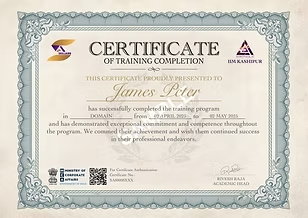
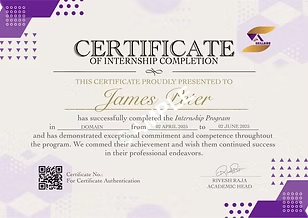
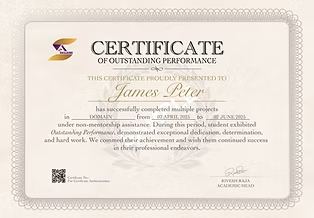
Get certified in Human Resources through our program and receive both a Training Completion Certificate and an Internship Completion Certificate. The prestigious Top Performer Certificate is awarded to outstanding students who performed exceptionally well during both the training and internship phases.
Pricing Plan
At SkillAiro, we’re committed to making high-quality education accessible to all. We’ve structured our programs with transparent and competitive pricing to suit a variety of learning needs.
Human Resources Industry Trends
These trends underscore India’s expanding role in the global Human Resources landscape, supported by a robust IT industry and a growing pool of skilled professionals.
8.7% Annual Growth Rate

India’s HR technology market was valued at USD 1,134.1 million in 2024 and is projected to grow at a CAGR of 8.7%, reaching USD 2,402.8 million by 2033. Growth is driven by the increasing adoption of digital tools for recruitment, performance management, and employee engagement. The integration of cloud computing, AI, and business intelligence is enhancing operational efficiency, positioning India as a rapidly evolving market in the HR tech space.
Other key industry trends
- In terms of revenue, India accounted for approximately 3% of the global HR analytics market in 2020.
- The U.S. is expected to lead the global HR analytics market in revenue by 2027.
- In the Asia Pacific region, China is projected to dominate the HR analytics market in terms of revenue by 2027.
- India is the fastest-growing HR analytics market in Asia Pacific, with significant growth driven by AI integration and digital transformation, projected to reach substantial market value by 2027.
In India, Human Resources (HR) professionals earn an average annual salary of approximately ₹7,00,000. Entry-level positions start at about ₹3,00,000 per year, while experienced professionals can earn up to ₹20,00,000 annually. Salaries vary by location, with metropolitan cities like Mumbai, Delhi, and Bengaluru offering higher averages due to the concentration of large corporations and multinational companies.
The HR industry in India is experiencing significant growth, with projections indicating a 7% increase in hiring activities in 2025. This growth is driven by a focus on diversity, equity, and inclusion (DEI) initiatives, employee experience, and the adoption of HR technology.
INR 3-20 L Annual Salary

Student Testimonial

At SkillAiro, we’re committed to making high-quality education accessible to all. We’ve structured our programs with transparent and competitive pricing to suit a variety of learning needs.
Anamika ,
Web Developer
At SkillAiro, we’re committed to making high-quality education accessible to all. We’ve structured our programs with transparent and competitive pricing to suit a variety of learning needs.
Anamika ,
Web Developer
At SkillAiro, we’re committed to making high-quality education accessible to all. We’ve structured our programs with transparent and competitive pricing to suit a variety of learning needs.
Anamika ,
Web Developer
At SkillAiro, we’re committed to making high-quality education accessible to all. We’ve structured our programs with transparent and competitive pricing to suit a variety of learning needs.
Anamika ,
Web Developer
At SkillAiro, we’re committed to making high-quality education accessible to all. We’ve structured our programs with transparent and competitive pricing to suit a variety of learning needs.
Anamika ,
Web Developer
Our Alumni Work At
Our alumni are already pushing boundaries in their fields. Former students are excelling in high-profile industries and influencing the landscape of tomorrow.
RECOGNITION FROM
Frequently Asked Questions
What is a Human Resources training?
A Human Resources (HR) program equips individuals with the skills and knowledge required to manage an organization’s workforce effectively. It typically covers topics such as recruitment and selection, employee relations, performance management, compensation and benefits, labor laws, organizational behavior, and HR technology. The program often includes case studies, role-playing exercises, and practical experience, preparing learners for careers as HR Managers, HR Specialists, or Talent Acquisition Consultants.
What does a HR do?
A Human Resources professional manages various aspects of the employee lifecycle, including recruitment, training, development, and employee relations. They handle tasks such as workforce planning, conflict resolution, performance appraisals, and ensuring compliance with labor laws and company policies. HR professionals also support employee engagement, compensation, and benefits programs. Our HR training program provides the technical expertise and practical experience needed to succeed in this essential field.
Who are the instructors for this Human Resources training program, and how are they selected?
Our Human Resources (HR) trainers are experienced professionals with extensive knowledge in talent acquisition, employee engagement, performance management, and organizational development. They bring practical expertise from diverse industries, providing students with real-world insights into modern HR practices and strategies. We ensure that only trainers with excellent alumni ratings and a proven track record of delivering high-quality training remain part of our faculty, offering students the best learning experience in HR management and practices.
What will be the career path after completing the Human Resources program online?
After completing an online Human Resources program, career paths include roles such as HR Coordinator, HR Generalist, Recruitment Specialist, Talent Acquisition Manager, or Learning and Development Specialist. With experience, you can progress to senior roles like HR Manager, HR Business Partner, or Chief Human Resources Officer (CHRO). Opportunities are available across industries like healthcare, technology, finance, and government.
Which industries use Human Resources the most?
Human Resources is essential across all industries, including healthcare, finance, education, technology, manufacturing, retail, and government. HR professionals are also highly sought after in sectors like hospitality, entertainment, and nonprofit organizations. This HR certification program is ideal for individuals seeking to build a career in these diverse and high-demand sectors.
Can I pay the fee in installments?
Yes, you can secure your spot by paying a pre-registration fee of 1000 INR. The remaining balance can be paid before the program begins.
Will I get an internship?
Yes, at Skillairo, we offer guaranteed internship opportunities for all students across all our courses, providing hands-on experience to enhance their learning and career prospects.
How long is the training?
Our Self-paced and Mentor-led training program both last for a period of 2-3 months. Our Advanced training program last for a period of 4 months.
Talk to Expert
At Skillairo, we help students and aspiring professionals gain industry-ready skills through expert-led training, hands-on projects, internships, and career guidance.