


Artificial Intelligence Training
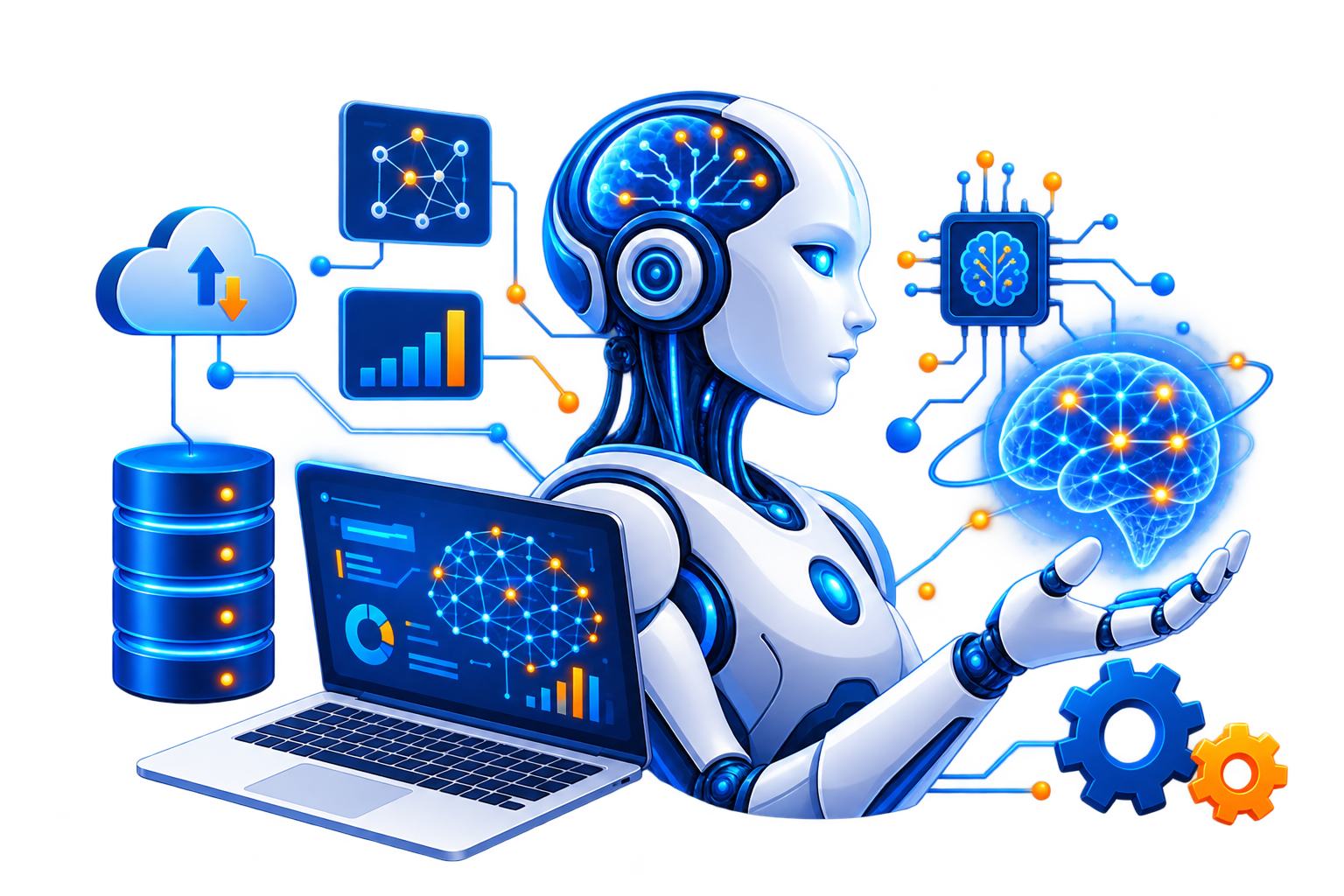
The Artificial Intelligence Training Program provides advanced, hands-on training in areas like machine learning, deep learning, natural language processing, computer vision, and reinforcement learning. Participants will use tools such as Python, TensorFlow, Keras, and PyTorch to design, train, and deploy AI models.
Why Choose Skillairo?
Expert Mentor
Industry Exposure
LMS Access
Talk & Skills
Professional Certificate
Career Support
Programs Overview
The Artificial Intelligence Training Program provides advanced, hands-on training in areas like machine learning, deep learning, natural language processing, computer vision, and reinforcement learning.
The program includes topics like AI model evaluation, optimization, and deployment through real-world projects. Tailored for software engineers and data scientists with programming experience, the program offers expert mentorship, flexible learning options, and an industry-recognized certification to help learners excel in AI applications.
Training Path
Introduction to Artificial Intelligence
What is Artificial Intelligence (AI)?
- AI vs Machine Learning vs Deep Learning
- Applications of AI
- Setting Up Python for AI
Mathematical Foundations for AI
- Linear Algebra
- Calculus (Derivatives and Gradients)
- Probability and Statistics Basics
- Graph Theory and Search Algorithms
Introduction to Machine Learning for AI
- Supervised and Unsupervised Learning Basics
- Regression and Classification Models
- Clustering and Dimensionality Reduction
- Model Evaluation Metrics
Natural Language Processing (NLP)
- Basics of NLP and Text Preprocessing
- Tokenization, Lemmatization, and Stemming
- Bag of Words and Word Embeddings
- Introduction to Transformers and Pretrained Models
Python Basics for AI
- Introduction to Python Programming
- Key Libraries for Artificial Intelligence
- Basics of Object-Oriented Programming in Python
- Introduction to Jupyter Notebooks
Knowledge Representation and Search
- Problem Solving as Search
- State Space, Graph Search, and Optimization
- Uninformed Search Techniques
- Informed Search Techniques
Neural Networks and Deep Learning
- Basics of Neural Networks
- Activation Functions and Loss Functions
- Introduction to TensorFlow and Keras
- Building and Training Deep Learning Models
Computer Vision and Image Processing
- Basics of Image Processing (OpenCV)
- Convolutional Neural Networks (CNNs)
- Object Detection and Image Classification
- Applications: Face Recognition and Image Segmentation
Skills Covered
- Generative AI
- Prompt Engineering
- ChatGPT
- Data Wrangling
- Python Programming
- NumPy and SciPy
- Deep Learning
- Reinforcement
- NLP
- CNN & RNN
- Linear Regression
- Logistic Regression
Industry Projects
E-commerce Website
Build an online shopping platform with product listings, user authentication, payment gateways, and order management. Focus on a smooth user experience and backend inventory management.
Blog Platform
Create a platform for users to write and publish blog posts, with features like user profiles, commenting, content management, and social sharing. Implement a simple, intuitive interface for authors and readers.
Event Management System
Develop a system for organizing, promoting, and managing events. Include features such as event registration, ticketing, calendar integration, attendee management, and event notifications.
Social Media Platform
Build a platform that allows users to create profiles, post content, follow others, like and comment on posts, and engage in direct messaging. Focus on real-time interactions and scalability.
Restaurant Reservation System
Develop a system that allows customers to book tables, view menus, make reservations, and get notifications. Implement an admin panel for managing bookings and customer details.

Create an intelligent chatbot that can answer user queries and engage in natural language conversations. Use Natural Language Processing (NLP) techniques and machine learning models like RNNs, LSTMs, or transformers.
The key component include
1.Interactive User Interface (UI) The UI includes a chat window with input fields, text bubbles, and a user-friendly layout. Additional features include options for multimedia inputs like voice, images, and quick action buttons for predefined responses, enhancing user interaction.
2.Robust Backend System The backend integrates Natural Language Processing (NLP) engines and databases to process and store user queries and responses. APIs connect the frontend with backend services, ensuring smooth communication and real-time data flow.
3.Primary Functional Capabilities Core functionalities include intent recognition, context handling, and response generation using NLP. The chatbot can answer FAQs, provide personalized responses, and integrate with external services like booking systems or payment gateways.
4.Enhanced Functional Features Advanced features include sentiment analysis for emotion-based responses, voice recognition for conversational AI, and multi-language support. Integration with AI models enables predictive responses and adaptive learning from user interactions.
5.Integration with External Tools Libraries like NLTK, SpaCy, and TensorFlow are used for NLP tasks. APIs such as Dialogflow, Rasa, or Microsoft Bot Framework offer robust tools for chatbot development. Communication APIs like Twilio or WhatsApp API enable multi-platform integration.
6.Structured System Architecture The system follows a modular architecture where user inputs are processed by an NLP engine, responses are generated through logic or AI models, and results are displayed via the frontend. This ensures a scalable and flexible chatbot system.
Technologies Python/Node.js (for backend development), HTML, CSS, JavaScript (for frontend), Flask/Django/Express (for server-side frameworks), MongoDB/MySQL/PostgreSQL (for database), TensorFlow/Rasa/Dialogflow (for NLP), Twilio/WhatsApp API (for messaging platforms), Docker/Kubernetes (for deployment), and AWS/GCP/Azure (for hosting). Outcome Chatbot Development results in intelligent virtual assistants capable of automating repetitive tasks, improving customer support efficiency, and enhancing user experience. These systems save time and resources while delivering round-the-clock assistance across various industries.

Develop a simulation for an autonomous vehicle that can navigate a virtual environment. Use AI techniques like reinforcement learning for decision-making and computer vision for obstacle detection.
The key component include
1.Immersive User Interface (UI) The UI includes a 3D simulation environment with interactive controls to monitor vehicle behavior. Real-time dashboards display metrics like speed, distance, and obstacle detection, providing an intuitive visualization of the simulation.
2.Sophisticated Backend System The backend integrates simulation engines, physics models, and AI algorithms to emulate real-world driving conditions. Databases store vehicle parameters, sensor data, and simulation results, ensuring seamless data management.
3.Primary Functional Modules Core functionalities include simulating traffic scenarios, testing vehicle responses to dynamic obstacles, and integrating sensor data like LiDAR, radar, and cameras. Additionally, it evaluates path planning, collision avoidance, and decision-making algorithms.
4.Advanced Simulation Capabilities Advanced features include weather simulation, multi-agent interactions, and high-fidelity mapping for realistic road layouts. Integration with deep learning models enables adaptive behavior analysis and performance optimization.
5.External Tools and Libraries Tools like CARLA, Gazebo, or LGSVL are used for simulation, while TensorFlow and PyTorch support AI model development. APIs for sensor emulation and vehicle dynamics further enhance the system’s capabilities.
6.System Architecture The architecture follows a modular design where sensors, AI models, and control systems interact via middleware. This ensures scalability and flexibility in testing different vehicle configurations and scenarios.
Technologies Python/C++ (for backend development), Unity/Unreal Engine (for simulation environment), ROS (Robot Operating System) for middleware, TensorFlow/PyTorch (for AI models), CARLA/LGSVL/Gazebo (for simulation tools), Docker/Kubernetes (for deployment), and AWS/GCP/Azure (for hosting).
Outcome Autonomous Vehicle Simulation provides a reliable platform for testing and refining self-driving technologies. It accelerates development cycles, reduces costs, and ensures safety by enabling extensive testing in virtual environments before real-world deployment.

Build an AI tool that scans and analyzes resumes, matching candidates’ qualifications with job descriptions. Use NLP and machine learning algorithms for document parsing and classification.
The key component include
1.Interactive User Interface (UI) The UI includes an intuitive dashboard for uploading resumes and viewing analysis results. Features like drag-and-drop upload, search filters, and graphical summaries enhance usability for recruiters.
2.Robust Backend Infrastructure The backend incorporates AI models for natural language processing (NLP) to parse and analyze resume content. It integrates databases to store applicant information and uses APIs to fetch job-specific requirements.
3.Primary Functional Modules Core functionalities include resume parsing, keyword matching with job descriptions, and ranking candidates based on predefined criteria. The system highlights relevant skills, experience, and qualifications for easy decision-making.
4.Advanced Analytical Capabilities Advanced features include sentiment analysis to evaluate candidate tone, fraud detection to identify falsified information, and machine learning models to improve accuracy over time. Integration with ATS (Applicant Tracking Systems) ensures seamless workflow.
5.External Tools and Libraries Libraries like SpaCy, NLTK, or Hugging Face are used for NLP tasks. APIs such as LinkedIn or Glassdoor provide supplementary candidate insights, while cloud services enable scalability and real-time processing.
6.System Architecture The system follows a modular architecture with an AI-powered parsing engine, a data storage layer for candidate records, and a decision engine for ranking. This architecture ensures scalability and adaptability for different recruitment needs.
Technologies Python (for backend development), Flask/Django (for web frameworks), React/Angular (for frontend), MongoDB/MySQL/PostgreSQL (for database), TensorFlow/PyTorch (for AI models), AWS/GCP/Azure (for hosting), and LinkedIn API (for candidate data).
Outcome An AI-Powered Resume Scanner streamlines the hiring process by automating resume evaluation, reducing human error, and ensuring fair and efficient recruitment. It empowers organizations to identify the best talent quickly, enhancing productivity and decision-making.

Create an AI-based language translation system that translates text between multiple languages. Use sequence-to-sequence models, such as transformers or LSTM networks, for effective language modeling.
The key component include
1.Interactive User Interface (UI) The UI includes an intuitive design with text input/output fields, voice input options, and language selection dropdowns. Features like auto-detection of languages, dark mode, and copy/share buttons enhance user experience.
2.Robust Backend Infrastructure The backend integrates advanced NLP models and translation APIs to process and convert text or speech into the desired language. Databases store frequently used translations and user preferences for efficiency.
3.Primary Functional Modules Core functionalities include text-to-text, speech-to-text, and text-to-speech translations. The app supports language auto-detection, transliteration, and provides context-aware translations for improved accuracy.
4.Advanced Translation Capabilities Advanced features include offline translation, real-time conversation mode, and image-based text translation using Optical Character Recognition (OCR). Machine learning models adapt to user-specific contexts for better personalization.
5.External Tools and Libraries APIs such as Google Translate API, Microsoft Translator API, or DeepL are used for translation tasks. Libraries like TensorFlow or PyTorch support AI model training, while Tesseract OCR enables image-to-text translation.
Technologies Python/JavaScript (for backend development), React Native/Flutter (for mobile apps), TensorFlow/PyTorch (for AI models), Google Translate API/Microsoft Translator API (for translation), Tesseract OCR (for image recognition), SQLite/Firestore (for data storage), and AWS/GCP/Azure (for hosting).
Outcome A Language Translator app facilitates seamless communication by breaking language barriers, making it a vital tool for global connectivity. It enhances accessibility, enables learning, and supports businesses in expanding their global reach effectively.

Build an AI system that tracks attendance using face recognition. Leverage computer vision and deep learning techniques to identify individuals and mark attendance automatically.
The key component include
1.Interactive User Interface (UI) The UI includes an intuitive dashboard for managing attendance data, displaying real-time reports, and generating alerts. Features like role-based access, search filters, and export options ensure ease of use for administrators and employees/students.
2.Robust Backend Infrastructure The backend integrates a secure database to store attendance records, user profiles, and schedules. It supports real-time data processing and incorporates APIs for biometric or facial recognition system integration.
3.Primary Functional Modules Core functionalities include attendance marking using biometrics, QR codes, or facial recognition, along with real-time tracking. The system supports leave management, automatic report generation, and notifications for irregularities.
4.Advanced Attendance Capabilities Advanced features include geo-fencing for location-based attendance, integration with payroll systems, and AI-driven analytics to identify trends and anomalies. Offline mode functionality ensures seamless operation during network issues.
5.External Tools and Libraries Tools like OpenCV and TensorFlow are used for facial recognition, while APIs like Firebase or Twilio enable notifications. Database systems like MySQL or MongoDB ensure reliable data storage and retrieval.
Technologies Python/Java (for backend development), React/Angular (for frontend development), OpenCV/TensorFlow (for facial recognition), Firebase/MySQL/MongoDB (for database), Android/iOS (for mobile app), IoT devices (for biometric integration), and AWS/GCP/Azure (for hosting).
Outcome A Smart Attendance System automates attendance tracking, enhances accuracy, and saves time by eliminating manual processes. It improves organizational efficiency, ensures compliance, and provides valuable insights through data analytics.
Certifications
Get certified Artificial Intelligence through our program and receive both a Training Completion Certificate and an Internship Completion Certificate. The prestigious Top Performer Certificate is awarded to outstanding students who performed exceptionally well during both the training and internship phases.



Pricing Plan
At SkillAiro, we’re committed to making high-quality education accessible to all. We’ve structured our programs with transparent and competitive pricing to suit a variety of learning needs.
Artificial Intelligence Industry Trends
40% Annual Growth Rate

The artificial intelligence (AI) industry in India is growing rapidly, with the market valued at USD 6.4 billion in 2020 and projected to grow at a CAGR of over 40% through 2028. Key sectors driving adoption include healthcare, agriculture, fintech, e-commerce, and education. Initiatives like the National AI Strategy (NITI Aayog) and AI research programs are accelerating growth.
With rising demand for AI-powered automation, predictive analytics, and decision-making tools, alongside strong investments and a thriving startup ecosystem, India is emerging as a pivotal player in the Asia-Pacific AI market.
Other Key Industry Trends
- Government Support: The Indian government has launched initiatives like the National Strategy on Artificial Intelligence (NSAI) to foster a robust AI ecosystem.
- Private Sector Investment: Companies like Microsoft are making significant investments in AI and cloud infrastructure in India, such as Microsoft’s $3 billion investment.
- Talent Pool: India has a growing AI talent pool, with approximately 420,000 AI professionals as of 2024, and demand for AI talent is expected to grow at a CAGR of 15% by 2027.
AI professionals, particularly in roles like AI engineers, researchers, and data scientists, enjoy some of the highest salaries in the tech industry. In India, the average annual salary for AI engineers is around ₹10 lakh, with senior-level professionals earning up to ₹30 lakh or more, especially in cities like Bengaluru, Gurgaon, and Hyderabad. Entry-level roles typically start at ₹6 lakh annually.
As AI technologies continue to gain traction across sectors, the demand for skilled professionals is expected to grow by 20-25% by 2025, further driving up salary levels.
INR 6-30 L Annual Salary

Student Testimonial

At SkillAiro, we’re committed to making high-quality education accessible to all. We’ve structured our programs with transparent and competitive pricing to suit a variety of learning needs.
Anamika ,
Web Developer
At SkillAiro, we’re committed to making high-quality education accessible to all. We’ve structured our programs with transparent and competitive pricing to suit a variety of learning needs.
Anamika ,
Web Developer
At SkillAiro, we’re committed to making high-quality education accessible to all. We’ve structured our programs with transparent and competitive pricing to suit a variety of learning needs.
Anamika ,
Web Developer
At SkillAiro, we’re committed to making high-quality education accessible to all. We’ve structured our programs with transparent and competitive pricing to suit a variety of learning needs.
Anamika ,
Web Developer
At SkillAiro, we’re committed to making high-quality education accessible to all. We’ve structured our programs with transparent and competitive pricing to suit a variety of learning needs.
Anamika ,
Web Developer
Our Alumni Work At
Our alumni are already pushing boundaries in their fields. Former students are excelling in high-profile industries and influencing the landscape of tomorrow.
RECOGNITION FROM



Frequently Asked Questions
What is a Artificial Intelligence training?
An Artificial Intelligence program equips individuals with the skills and knowledge required to design, build, and deploy intelligent systems. It typically covers topics like machine learning, deep learning, neural networks, natural language processing, computer vision, robotics, and AI ethics. The program often includes hands-on projects and real-world case studies, preparing learners for careers as AI Specialists, Machine Learning Engineers, Data Scientists, and related roles.
What does a Artificial Intelligence do?
An Artificial Intelligence Engineer develops, trains, and optimizes AI models to solve complex problems. They work on tasks such as creating intelligent algorithms, training machine learning models, and integrating AI systems into applications. Using tools like TensorFlow, PyTorch, and programming languages such as Python and R, they enable machines to perform tasks like image recognition, speech processing, and decision-making. Our AI training program provides the technical and practical expertise needed to excel in this field.
Who are the instructors for this Artificial Intelligence training program, and how are they selected?
The Future Academe’s Artificial Intelligence instructors are experienced professionals with a strong background in AI, Python, and data science. They are carefully selected based on their expertise and consistently positive feedback from students.
What will be the career path after completing the Artificial Intelligence program online?
After completing an online AI training program, career paths include roles such as AI Specialist, Machine Learning Engineer, Deep Learning Engineer, Data Scientist, Natural Language Processing Engineer, and Robotics Engineer. With experience, you can progress to advanced roles like AI Researcher, AI Architect, or Chief AI Officer. Opportunities span industries such as healthcare, finance, technology, automotive, and entertainment.
Which industries use Artificial Intelligence the most?
Artificial Intelligence is revolutionizing industries like healthcare, finance, automotive, retail, manufacturing, technology, and telecommunications. It is widely used in applications such as predictive analytics, autonomous vehicles, recommendation systems, and virtual assistants. Sectors like education, gaming, and agriculture also rely on AI for innovative solutions. This AI certification program is perfect for individuals looking to build a career in these transformative fields.
Can I pay the fee in installments?
Yes, you can secure your spot by paying a pre-registration fee of 1000 INR. The remaining balance can be paid before the program begins.
Will I get an internship?
Yes, at Skillairo, we offer guaranteed internship opportunities for all students across all our courses, providing hands-on experience to enhance their learning and career prospects.
How long is the training?
Our Self-paced and Mentor-led training program both last for a period of 2-3 months. Our Advanced training program last for a period of 4 months.
Talk to Expert
At Skillairo, we help students and aspiring professionals gain industry-ready skills through expert-led training, hands-on projects, internships, and career guidance.