




Digital Marketing Training
The Digital Marketing Training Program is a comprehensive, hands-on course designed to equip participants with the essential skills required to excel in the dynamic world of digital marketing. It covers key topics such as SEO (Search Engine Optimization), SEM (Search Engine Marketing), social media marketing, content marketing, email marketing, data analytics, and online advertising. Participants will gain practical experience in creating effective digital marketing strategies, optimizing campaigns, and driving brand awareness across various online platforms.
Why Choose Skillairo?
Expert Mentor
Industry Exposure
LMS Access
Talk & Skills
Professional Certificate
Career Support
Programs Overview
The Digital Marketing Training Program is a comprehensive, hands-on course designed to equip participants with the essential skills required to excel in the dynamic world of digital marketing.
Ideal for aspiring digital marketers, business owners, and content creators, this program offers flexible learning options, expert mentorship, and an industry-recognized certification. By the end of the course, participants will be proficient in utilizing digital marketing tools, analyzing data insights, and executing impactful marketing campaigns to boost business growth and online presence.
Training Path
Introduction to Digital Marketing
What is Digital Marketing?
- Importance of Digital Marketing in Today’s World
- Digital Marketing vs. Traditional Marketing
- Overview of Digital Marketing Channels
Search Engine Optimization (SEO)
- Introduction to Search Engines
- On-Page SEO
- Off-Page SEO
- Technical SEO
- Tools for SEO
Social Media Marketing
- Overview of Social Media Platforms
- Developing a Social Media Strategy
- Content Creation for Social Media
- Social Media Advertising and Targeting
Analytics and Performance Measurement
- Introduction to Google Analytics
- Setting Up Goals, Funnels, and Conversions
- Analyzing Key Metrics
- Reporting and Visualizing Data for Decision-Making
Website and Content Marketing
- Basics of Website Design and User Experience (UX)
- Importance of Landing Pages and Calls-to-Action (CTAs)
- Content Marketing Basics
- Creating a Content Strategy Aligned with Business Goals
Search Engine Marketing (SEM) and Pay-Per-Click (PPC)
- Introduction to Google Ads and Other Advertising Platforms
- Creating and Managing Search Campaigns
- Keyword Research and Competitive Analysis
- Optimizing Ads for Better Click-Through Rates (CTR) and Conversion Rates
Email Marketing and Automation
- Basics of Email Marketing and Its Role in Digital Strategies
- Building and Managing Email Lists
- Creating Effective Email Campaigns
- Introduction to Email Automation Tools
Affiliate Marketing and Influencer Marketing
- Basics of Affiliate Marketing
- Finding and Partnering with Affiliates
- Introduction to Influencer Marketing Strategies
- Managing Influencer Campaigns and Measuring Success
Skills Covered
- Website Creation
- Behavioral Marketing
- Keyword Research
- Campaign Managt
- Mobile Marketing
- Content Marketing
- Content Strategy
- Analytics, ROI
- AI Automation
- Emerging Technology
- Generative AI Tools
- Social Media Marketg
Industry Projects
E-commerce Website
Build an online shopping platform with product listings, user authentication, payment gateways, and order management. Focus on a smooth user experience and backend inventory management.
Blog Platform
Create a platform for users to write and publish blog posts, with features like user profiles, commenting, content management, and social sharing. Implement a simple, intuitive interface for authors and readers.
Event Management System
Develop a system for organizing, promoting, and managing events. Include features such as event registration, ticketing, calendar integration, attendee management, and event notifications.
Social Media Platform
Build a platform that allows users to create profiles, post content, follow others, like and comment on posts, and engage in direct messaging. Focus on real-time interactions and scalability.
Restaurant Reservation System
Develop a system that allows customers to book tables, view menus, make reservations, and get notifications. Implement an admin panel for managing bookings and customer details.
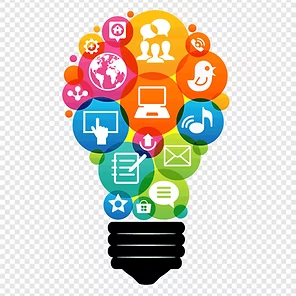
Analyze the performance of a social media marketing campaign by evaluating metrics such as engagement, reach, conversions, and ROI. Use tools like Google Analytics, social media insights, and A/B testing to derive actionable insights. The key component include
1.Campaign Data Collection Gather data from social media platforms using APIs to track metrics like impressions, clicks, shares, comments, and conversions.
2.Audience Analysis Analyze audience demographics, interests, and engagement patterns to understand campaign reach and effectiveness.
3.Performance Metrics and KPIs Evaluate key performance indicators (KPIs) such as engagement rate, click-through rate (CTR), cost per click (CPC), and conversion rate to measure success.
4.Competitor Benchmarking Compare campaign performance against competitors in the same industry to identify strengths and areas for improvement.
5.Sentiment Analysis Utilize natural language processing (NLP) to assess public sentiment around the campaign content and brand mentions.
6.Visualization and Reporting Create interactive dashboards and detailed reports to showcase insights, trends, and actionable recommendations.
7.Optimization Recommendations Provide data-driven suggestions to improve future campaigns, such as targeting adjustments, content enhancements, or budget reallocations.
Technologies Python, Pandas, Matplotlib/Seaborn (for data analysis), Facebook Graph API, Twitter API, Google Analytics, Tableau/Power BI (for visualization), and Natural Language Toolkit (NLTK) or TextBlob (for sentiment analysis).
Outcome A comprehensive analysis of social media marketing campaigns that empowers businesses to make informed decisions, optimize strategies, and improve campaign outcomes for higher engagement and conversions.
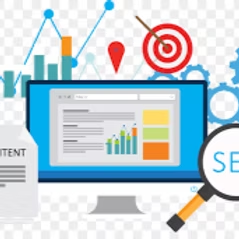
Optimize a website for search engines by improving on-page and off-page SEO factors. Implement keyword research, content optimization, backlink strategies, and technical SEO (site speed, mobile optimization) to increase organic search rankings. The key component include
1.Keyword Research and Analysis Identify high-performing keywords using tools like Google Keyword Planner or SEMrush to target relevant search queries.
2.On-Page Optimization Optimize website elements such as meta titles, meta descriptions, headers, and content structure. Ensure proper use of keywords, internal linking, and image alt attributes.
3.Technical SEO Improve website speed, mobile responsiveness, XML sitemaps, and robots.txt. Ensure the site is crawlable and indexed by search engines.
4.Content Creation and Optimization Develop high-quality, engaging, and keyword-optimized content. Focus on blogs, landing pages, and multimedia content to attract and retain visitors.
5.Link Building and Off-Page SEO Implement strategies to acquire high-quality backlinks through guest blogging, outreach campaigns, and directory submissions.
6.Analytics and Performance Tracking Monitor website performance using tools like Google Analytics and Google Search Console. Track metrics such as organic traffic, bounce rate, and keyword rankings.
7.Competitor Analysis Analyze competitors’ SEO strategies to identify gaps and opportunities for improving the website’s ranking and visibility.
Technologies Google Analytics, Google Search Console, Ahrefs, SEMrush, Screaming Frog (for audits), WordPress/HTML (for website management), and GTmetrix or Lighthouse (for performance optimization).
Outcome An SEO-optimized website with improved search engine rankings, higher organic traffic, and better user engagement. This leads to enhanced brand visibility and increased conversions over time.

Develop a dashboard to track and analyze the performance of Google Ads campaigns. Include metrics such as cost-per-click (CPC), click-through rate (CTR), conversion rates, and return on ad spend (ROAS) for better decision-making. The key component include
1.Data Integration and Extraction Connect to Google Ads API to extract campaign data, including impressions, clicks, CPC (cost-per-click), conversions, and ad spend.
2.Campaign Performance Metrics Track key performance indicators (KPIs) such as CTR (click-through rate), conversion rate, ROI (return on investment), and quality score for ads.
3.Audience and Demographics Analysis Analyze audience data, including location, age, gender, and device usage, to assess the effectiveness of targeting strategies.
4.Ad Group and Keyword Performance Evaluate performance at the ad group and keyword levels to identify high-performing and underperforming keywords.
5.Visualization and Reporting Design interactive charts and graphs to visualize trends in campaign performance, budget utilization, and audience engagement.
6.Budget and Spend Optimization Provide insights on budget allocation and recommend adjustments to maximize ROI and minimize wasted spend.
7.Competitor Benchmarking Compare campaign performance metrics against competitors to identify industry trends and opportunities for improvement.
Technologies Google Ads API, Python (for data extraction and processing), Pandas, Matplotlib/Seaborn (for data visualization), Tableau/Power BI (for dashboard creation), and SQL (for database management).
Outcome An interactive dashboard that provides a comprehensive view of Google Ads campaign performance. Businesses can leverage this tool to optimize ad strategies, enhance targeting, and improve overall ROI by making data-driven decisions.
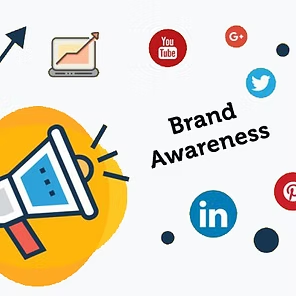
Create a content marketing strategy to build brand awareness through blog posts, social media content, videos, and other forms of media. Focus on creating high-quality, engaging content that resonates with the target audience and drives organic traffic. The key component include
1.Content Strategy Development Identify target audience personas and define content goals aligned with brand objectives. Plan a content calendar covering blogs, videos, infographics, and social media posts.
2.SEO-Optimized Content Creation Develop high-quality content optimized for search engines to improve organic visibility and drive traffic. Incorporate keywords, meta descriptions, and internal linking strategies.
3.Social Media Content Distribution Leverage social media platforms like Instagram, LinkedIn, and Twitter for content dissemination. Schedule posts and monitor engagement metrics to refine strategies.
4.Email Marketing Campaigns Create targeted email campaigns to nurture leads and retain customers. Use newsletters and personalized content to build relationships and promote brand loyalty.
5.Performance Metrics and Analytics Measure content performance using tools like Google Analytics and social media insights. Track metrics such as traffic, engagement, conversion rates, and ROI.
6.Audience Engagement and Feedback Interact with the audience through comments, polls, and direct messages to build a community and gather feedback for content improvement.
7.Content Repurposing and Optimization Repurpose existing content into multiple formats (e.g., blog posts into videos or infographics) to maximize reach and effectiveness.
Technologies Google Analytics, SEMrush, Canva, Mailchimp, Hootsuite, WordPress, and Adobe Creative Suite.
Outcome A robust content marketing framework that enhances brand visibility, drives audience engagement, and establishes thought leadership in the industry. This ultimately leads to increased customer acquisition and retention.

Develop a marketing strategy based on data analysis to optimize marketing efforts. Use customer data, sales metrics, and behavioral insights to inform decisions on targeting, budgeting, content, and campaign optimization. The key component include
1.Customer Data Collection and Analysis Gather customer data from multiple sources, such as CRM systems, social media, and website analytics. Analyze patterns to understand customer preferences and behaviors.
2.Market Segmentation and Targeting Segment the audience based on demographics, interests, and behavior. Develop personalized marketing strategies to target specific customer groups effectively.
3.Campaign Performance Monitoring Track key performance indicators (KPIs) such as click-through rates (CTR), conversion rates, and customer acquisition costs (CAC) to evaluate campaign success.
4.Predictive Analytics for Marketing Use predictive modeling and machine learning techniques to forecast trends, customer lifetime value (CLV), and potential campaign outcomes.
5.Multi-Channel Marketing Integration Implement and optimize campaigns across multiple channels, including email, social media, search engines, and display ads, ensuring consistency in messaging.
6.A/B Testing and Optimization Conduct A/B testing for marketing content, such as email subject lines, ad copy, and landing pages, to identify the most effective approaches.
7.Visualization and Reporting Create dashboards to visualize data insights and campaign performance metrics, enabling stakeholders to make data-driven decisions.
Technologies Google Analytics, Tableau, Python (for data analysis), R, HubSpot, Salesforce, SEMrush, and Facebook Ads Manager.
Outcome A comprehensive data-driven marketing strategy that enhances targeting, improves campaign ROI, and drives business growth by leveraging actionable insights and analytics.
Certifications
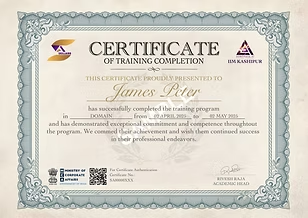
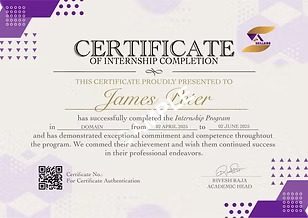
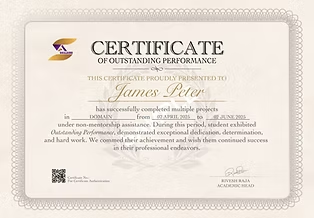
Get certified in Digital Marketing through our program and receive both a Training Completion Certificate and an Internship Completion Certificate. The prestigious Top Performer Certificate is awarded to outstanding students who performed exceptionally well during both the training and internship phases.
Pricing Plan
At SkillAiro, we’re committed to making high-quality education accessible to all. We’ve structured our programs with transparent and competitive pricing to suit a variety of learning needs.
Digital Marketing Industry Trends
These trends underscore India’s expanding role in the global Digital Marketing landscape, supported by a robust IT industry and a growing pool of skilled professionals.
30.2% Annual Growth Rate

India’s digital marketing sector was valued at USD 5.15 billion in 2023 and is projected to grow at a CAGR of 30.2%, reaching USD 55.37 billion by 2032. Digital advertising made up 44% of total ad spend in 2023, expected to rise to 55%by 2025. Growth is driven by increased internet penetration, e-commerce expansion, and the rise of social media and influencer marketing. With technological advancements and data-driven strategies, India is set to become a major player in the global digital marketing space.
Other Key Industry Trends
- India contributed around 4% of the global digital marketing revenue in 2020, reflecting rapid digital adoption.
- The U.S. is expected to continue leading the global digital marketing market in revenue by 2027.
- In the Asia Pacific region, China is projected to hold the largest share of digital marketing revenue by 2027.
- India is the fastest-growing digital marketing market in Asia Pacific, expected to witness exponential growth with the rise of social media, e-commerce, and mobile internet, projected to reach multi-billion USD figures by 2027.
In India, Digital Marketing Executives earn an average annual salary of approximately ₹3.0 lakhs, with a typical range between ₹1.2 lakhs and ₹5.4 lakhs. Entry-level positions start around ₹1.2 lakhs per year, while experienced professionals can earn up to ₹8.0 lakhs annually. Salaries vary by location, with Gurugram offering an average of ₹6.5 lakhs per year, Bengaluru at ₹6.0 lakhs, and Mumbai at ₹5.5 lakhs.
The digital marketing industry in India is experiencing significant growth, with projections indicating a 15-20% increase in job opportunities across various sectors by 2025.
INR 1.2-8L Annual Salary

Student Testimonial

At SkillAiro, we’re committed to making high-quality education accessible to all. We’ve structured our programs with transparent and competitive pricing to suit a variety of learning needs.
Anamika ,
Web Developer
At SkillAiro, we’re committed to making high-quality education accessible to all. We’ve structured our programs with transparent and competitive pricing to suit a variety of learning needs.
Anamika ,
Web Developer
At SkillAiro, we’re committed to making high-quality education accessible to all. We’ve structured our programs with transparent and competitive pricing to suit a variety of learning needs.
Anamika ,
Web Developer
At SkillAiro, we’re committed to making high-quality education accessible to all. We’ve structured our programs with transparent and competitive pricing to suit a variety of learning needs.
Anamika ,
Web Developer
At SkillAiro, we’re committed to making high-quality education accessible to all. We’ve structured our programs with transparent and competitive pricing to suit a variety of learning needs.
Anamika ,
Web Developer
Our Alumni Work At
Our alumni are already pushing boundaries in their fields. Former students are excelling in high-profile industries and influencing the landscape of tomorrow.
RECOGNITION FROM
Frequently Asked Questions
What is a Digital Marketing ?
A Digital Marketing program equips individuals with the skills and knowledge required to promote products or services online effectively. It typically covers topics such as search engine optimization (SEO), pay-per-click (PPC) advertising, social media marketing, content marketing, email marketing, web analytics, and marketing automation tools. The program often includes hands-on projects and case studies, preparing learners for careers as Digital Marketers, SEO Specialists, Social Media Managers, or Marketing Analysts.
What does a Digital Marketer do?
A Digital Marketer creates and implements online marketing strategies to increase brand awareness, generate leads, and drive sales. They use tools like Google Ads, social media platforms, email marketing software, and analytics tools to reach target audiences and measure campaign success. Their work involves SEO, social media campaigns, content creation, and performance tracking. Our digital marketing training program provides the expertise and practical skills needed to excel in this fast-growing field.
Who are the instructors for this Digital Marketing program, and how are they selected?
Our Digital Marketing trainers are accomplished industry professionals with extensive expertise in SEO, SEM, social media marketing, content marketing, email campaigns, and analytics. They bring practical insights from real-world marketing campaigns, ensuring students gain hands-on experience with the latest tools and strategies. With a commitment to excellence, we ensure that only trainers with exceptional alumni ratings and a proven record of delivering impactful training remain part of our faculty, offering students the best learning experience in digital marketing.
What will be the career path after completing the Digital Marketing program online?
After completing an online digital marketing program, career paths include roles such as Digital Marketing Specialist, SEO Analyst, Social Media Manager, Content Marketing Strategist, PPC Specialist, or Marketing Analyst. With experience, you can advance to roles like Digital Marketing Manager, Growth Hacker, or Chief Marketing Officer (CMO). Opportunities are abundant across industries like e-commerce, technology, media, and education.
Which industries use Digital Marketing the most?
Digital marketing is essential across industries such as e-commerce, retail, technology, healthcare, education, entertainment, and real estate. Companies in finance, hospitality, and telecommunications also heavily rely on digital marketing to reach and engage their audiences. This digital marketing certification program is ideal for individuals aiming to pursue a career in these dynamic and rapidly growing sectors.
Can I pay the fee in installments?
Yes, you can secure your spot by paying a pre-registration fee of 1000 INR. The remaining balance can be paid before the program begins.
Will I get an internship?
Yes, at Skillairo, we offer guaranteed internship opportunities for all students across all our courses, providing hands-on experience to enhance their learning and career prospects.
How long is the training?
Our Self-paced and Mentor-led training program both last for a period of 2-3 months. Our Advanced training program last for a period of 4 months.
Talk to Expert
At Skillairo, we help students and aspiring professionals gain industry-ready skills through expert-led training, hands-on projects, internships, and career guidance.