


Database Management System (DBMS) Training
The Database Management System (DBMS) Training Program is a hands-on course designed to teach the fundamentals of database design, development, and management. Participants will learn key concepts such as relational databases, SQL, normalization, indexing, transactions, and database security. The program covers popular DBMS platforms like MySQL, PostgreSQL, and Oracle, providing practical experience in querying, managing, and optimizing databases.
Why Choose Skillairo?
Expert Mentor
Industry Exposure
LMS Access
Talk & Skills
Professional Certificate
Career Support
Programs Overview
The Database Management System (DBMS) Training Program is a hands-on course designed to teach the fundamentals of database design, development, and management. Participants will learn key concepts such as relational databases, SQL, normalization, indexing, transactions, and database security. The program covers popular DBMS platforms like MySQL, PostgreSQL, and Oracle, providing practical experience in querying, managing, and optimizing databases.Through real-world projects, learners will gain skills in database creation, management, and troubleshooting, along with advanced topics like performance tuning and backup strategies. The course is ideal for aspiring database administrators, software developers, and IT professionals.
Training Path
Introduction to Database Management System
What is a Database?
- Types of Databases
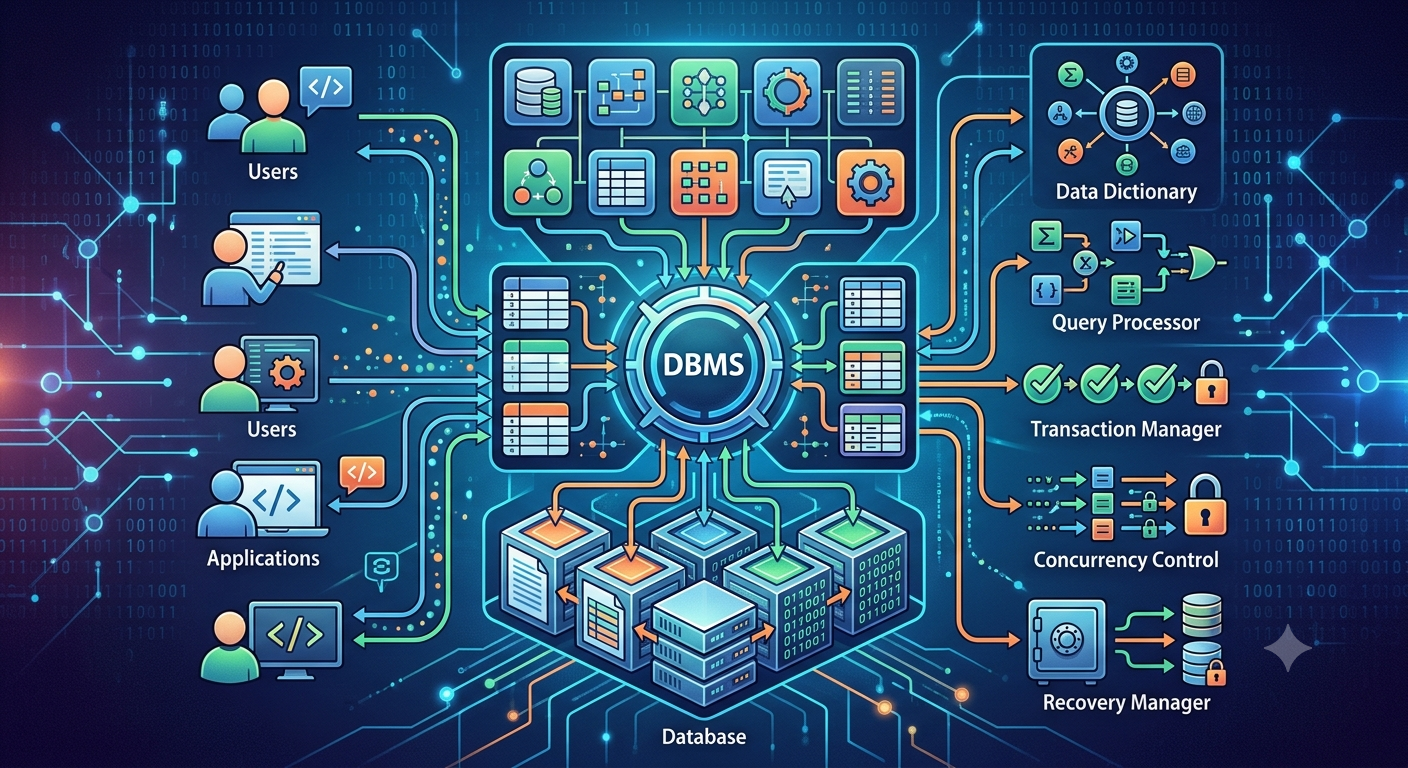
- Components of DBMS
- Advantages and Applications of DBMS
Introduction to SQL
- Basics of SQL and RDBMS
- SQL Commands
- Writing Basic Queries
- Using Clauses
NoSQL Databases
- Introduction to NoSQL Databases
- Differences Between SQL and NoSQL
- Working with Document-Oriented Databases
- CRUD Operations in NoSQL Databases
Database Security
- Authentication and Authorization
- Data Encryption
- Managing Database Permissions and Roles
- Protecting Against SQL Injection and Other Threats
Database Design and Modeling
- Data Models
- Introduction to Entity-Relationship (ER) Diagrams
- Normalization
- Designing and Creating a Database Schema
Advanced SQL Concepts
- Joins and Subqueries
- Views, Indexes, and Stored Procedures
- Aggregate Functions
- Triggers and Transactions
Database Administration
- Installing and Configuring a Database Management System
- User Management and Roles in a DBMS
- Database Backup and Recovery Strategies
- Monitoring and Optimizing Database Performance
Advanced Topics in Database Management
- Distributed Databases and Sharding
- Data Warehousing and OLAP Concepts
- Working with Big Data Technologies
- Introduction to Cloud-Based Databases
Skills Covered
- Database Design
- Query Optimization
- Data Normalization
- Denormalization
- Concurrency Control
- Performance Tuning
- Authentication
- Relational Algebra
- Relational Calculus
- NoSQL Databases
- ER Diagrams
- Schema Design
Industry Projects
E-commerce Website
Build an online shopping platform with product listings, user authentication, payment gateways, and order management. Focus on a smooth user experience and backend inventory management.
Blog Platform
Create a platform for users to write and publish blog posts, with features like user profiles, commenting, content management, and social sharing. Implement a simple, intuitive interface for authors and readers.
Event Management System
Develop a system for organizing, promoting, and managing events. Include features such as event registration, ticketing, calendar integration, attendee management, and event notifications.
Social Media Platform
Build a platform that allows users to create profiles, post content, follow others, like and comment on posts, and engage in direct messaging. Focus on real-time interactions and scalability.
Restaurant Reservation System
Develop a system that allows customers to book tables, view menus, make reservations, and get notifications. Implement an admin panel for managing bookings and customer details.

Develop a system to manage books, borrowers, and transactions in a library. Include features like book search, member registration, due date tracking, fines management, and inventory updates. The key component include
1.Book Inventory Management Maintain a comprehensive database of books, including details like title, author, genre, publication year, ISBN, and availability status. Enable search and filtering options for quick access.
2.User Management Manage user accounts for members and staff, including registration, login, and role-based access control. Track member details like contact information, membership status, and borrowing history.
3.Borrowing & Returning Management Automate the process of issuing and returning books. Record transaction details, due dates, and overdue fines to ensure seamless library operations.
4.Reservation System Allow users to reserve books currently unavailable and notify them when the book becomes available for pickup.
5.Reporting & Analytics Generate detailed reports on book circulation, overdue books, and member activity. Visualize trends in borrowing patterns using charts and graphs for better decision-making.
6.Notification System Send automated notifications to users for overdue books, reservation status, and membership renewals via email or SMS.
7.Search and Filtering Provide advanced search and filtering options to help users quickly locate books or members based on specific criteria like genre, author, or membership type.
Technologies Java/Python, MySQL/PostgreSQL (for database), React/Angular (for frontend), Flask/Django/Spring Boot (for backend), RESTful APIs, and tools for email/SMS notifications (e.g., Twilio, SendGrid).
Outcome A Library Management System that optimizes library operations, reduces manual workload, and enhances user satisfaction by providing a seamless experience for book borrowing, returning, and inventory management.

Create a database system to manage patient information, doctor schedules, medical records, appointments, and billing. Ensure data privacy and secure access for staff and patients. The key component include
1.Patient Records Management Maintain a centralized database of patient information, including personal details, medical history, diagnoses, treatment plans, and test results. Enable quick access and updates to records.
2.Staff Management Store and manage information about doctors, nurses, and administrative staff, including schedules, specialties, contact details, and work history.
3.Appointment Scheduling Facilitate efficient scheduling of patient appointments with doctors. Allow patients to book, modify, or cancel appointments and send automated reminders.
4.Billing & Payments Automate the billing process by generating invoices for treatments, medications, and hospital services. Integrate payment gateways for secure online transactions.
5.Inventory Management Track the availability of medical supplies, equipment, and medications. Generate alerts for restocking and manage supplier information.
6.Reports & Analytics Generate detailed reports on patient admissions, revenue, staff performance, and resource utilization. Visualize trends to support decision-making.
7.Security & Access Control Implement role-based access control to ensure data security and privacy, allowing only authorized personnel to access sensitive information.
Technologies MySQL/PostgreSQL/Oracle Database, Python/Java/C# (for backend processing), React/Angular/Vue.js (for frontend development), RESTful APIs, and tools for data visualization (e.g., Power BI, Tableau).
Outcome A comprehensive Hospital Management Database system that streamlines operations, reduces manual effort, ensures accurate record-keeping, and enhances patient and staff satisfaction through efficient service delivery.

Build a system for tracking inventory levels, orders, suppliers, and sales. Include features like stock updates, order alerts, and generating reports on product status and supply chain metrics. The key component include
1.Inventory Tracking Maintain real-time records of inventory, including product details, stock levels, categories, and locations. Enable barcode or QR code scanning for efficient tracking.
2.Stock Management Automate stock updates based on sales, purchases, and returns. Set thresholds for minimum stock levels and generate alerts for replenishment.
3.Order Management Streamline the ordering process by tracking purchase orders, supplier details, and order statuses. Allow businesses to manage vendor relationships effectively.
4.Reporting & Analytics Generate detailed reports on inventory turnover, stock valuation, and sales trends. Use analytics to forecast demand and optimize stock levels.
5.Multi-Location Support Manage inventory across multiple warehouses or retail locations. Provide centralized control with location-specific tracking and reporting.
6.Security & Role-Based Access Implement role-based access control to protect sensitive data and ensure that only authorized personnel can manage inventory records.
7.Integration with Sales & Accounting Systems Integrate with POS systems and accounting software to ensure seamless data flow between inventory, sales, and financial records.
Technologies MySQL/PostgreSQL/MongoDB (for database), Python/Java/C# (for backend processing), React/Angular/Vue.js (for frontend development), RESTful APIs, and tools for barcode/QR code integration (e.g., Zxing, Zbar).
Outcome An efficient Inventory Management System that provides real-time inventory visibility, reduces manual effort, minimizes operational costs, and supports data-driven decision-making for optimized inventory management.

Develop a database to manage customer accounts, transactions, loans, and banking services. Implement secure access and data integrity for transactions, account balances, and account history. The key component include
1.Customer Account Management Maintain detailed records of customer accounts, including personal information, account types, balances, and transaction history. Enable account creation, modification, and closure.
2.Transaction Management Record and process transactions such as deposits, withdrawals, fund transfers, and bill payments. Ensure accurate real-time updates to account balances.
3.Loan and Credit Management Manage loan applications, approvals, repayment schedules, and interest calculations. Track credit card details and transaction history for better financial management.
4.Security & Authentication Implement multi-factor authentication, encryption, and secure session management to protect customer data and transactions from unauthorized access.
5.Reports & Analytics Generate reports on customer activity, account balances, loan repayments, and overall system performance. Use analytics to identify trends and improve banking services.
6.Integration with Third-Party Services Integrate with payment gateways, tax systems, and external financial services for seamless transactions and compliance with regulatory requirements.
7.Customer Support & Notifications Provide features for customer support, including FAQs and chatbot integration. Send automated alerts and notifications for transactions, due payments, and account updates.
Technologies MySQL/PostgreSQL/Oracle Database (for data storage), Java/Python/C# (for backend), Angular/React/Vue.js (for frontend), RESTful APIs, encryption tools (e.g., OpenSSL), and payment gateway APIs (e.g., PayPal, Stripe).
Outcome A secure and efficient Online Banking System Database that simplifies account management, streamlines transactions, enhances customer satisfaction, and ensures compliance with banking regulations.

Build a database to manage property listings, client details, transactions, and payment records. Include features like property search, rental or sale status updates, and transaction history. The key component include
1.Property Listings Management Maintain a database of property details, including type, location, size, price, and images. Enable advanced search and filtering options for users to find suitable properties.
2.User Account Management Manage user profiles for buyers, sellers, and agents. Include features for registration, authentication, and role-based access control.
3.Client Interaction Tools Provide communication channels for buyers, sellers, and agents, including messaging systems and appointment scheduling for property visits.
4.Transaction Management Track and manage property transactions, including offers, agreements, and payment processing. Generate invoices and payment receipts.
5.Reports & Analytics Generate detailed reports on property trends, sales performance, and client engagement. Use analytics to forecast market trends and improve decision-making.
6.Security & Data Privacy Ensure data security with encryption and secure access protocols. Comply with relevant data protection regulations to safeguard user information.
7.Integration with Third-Party Services Integrate with mapping services (e.g., Google Maps) for property location visualization and financial tools for mortgage and loan calculations.
Technologies MySQL/PostgreSQL/MongoDB (for database), Python/Java/C# (for backend), React/Angular/Vue.js (for frontend), RESTful APIs, Google Maps API, and data visualization tools (e.g., Chart.js, Tableau).
Outcome A comprehensive Real Estate Management System that simplifies property management, enhances client engagement, streamlines transactions, and provides actionable insights for better market positioning.
Certifications
Get certified in Database Management System through our program and receive both a Training Completion Certificate and an Internship Completion Certificate. The prestigious Top Performer Certificate is awarded to outstanding students who performed exceptionally well during both the training and internship phases.



Pricing Plan
At SkillAiro, we’re committed to making high-quality education accessible to all. We’ve structured our programs with transparent and competitive pricing to suit a variety of learning needs.
DBMS Industry Trends
These trends underscore India’s expanding role in the global DBMS landscape, supported by a robust IT industry and a growing pool of skilled professionals.
21.8% Annual Growth Rate

The database management industry in India is growing rapidly, driven by the increasing demand for data storage, management, and security. The cloud database and Database-as-a-Service (DBaaS) market in India is projected to reach a revenue of USD 2,009.5 million by 2030, reflecting a compound annual growth rate (CAGR) of 21.8% from 2024 to 2030.
The global DBMS market was valued at USD 61.5 billion in 2020, with a projected CAGR of 13.4% from 2021 to 2028. The rise of big data analytics, cloud computing, and the growing volume of digital data is boosting the need for database management solutions.
Other Key Industry Trends
- Global Market Share: In 2020, the global DBMS market was valued at USD 64.8 billion, with India accounting for a portion of this market.
- The Asia-Pacific DBMS market is projected to experience substantial growth from 2020 to 2026, with India contributing significantly to this expansion.
In India, Database Management System (DBMS) professionals earn an average annual salary of approximately ₹1,050,000, with total compensation around ₹1,180,000 per year. Entry-level positions start at about ₹3.5 lakhs per year, while experienced professionals can earn up to ₹25 lakhs annually. Salaries vary by location, with Gurgaon offering an average of ₹12,50,000 per year, Bengaluru at ₹11,50,000, and Hyderabad at ₹11,00,000.
The DBMS industry in India is witnessing steady growth, with projections indicating a 12-18% increase in job opportunities across various sectors by 2025.
INR 3.5-25 L Annual Salary

Student Testimonial

At SkillAiro, we’re committed to making high-quality education accessible to all. We’ve structured our programs with transparent and competitive pricing to suit a variety of learning needs.
Anamika ,
Web Developer
At SkillAiro, we’re committed to making high-quality education accessible to all. We’ve structured our programs with transparent and competitive pricing to suit a variety of learning needs.
Anamika ,
Web Developer
At SkillAiro, we’re committed to making high-quality education accessible to all. We’ve structured our programs with transparent and competitive pricing to suit a variety of learning needs.
Anamika ,
Web Developer
At SkillAiro, we’re committed to making high-quality education accessible to all. We’ve structured our programs with transparent and competitive pricing to suit a variety of learning needs.
Anamika ,
Web Developer
At SkillAiro, we’re committed to making high-quality education accessible to all. We’ve structured our programs with transparent and competitive pricing to suit a variety of learning needs.
Anamika ,
Web Developer
Our Alumni Work At
Our alumni are already pushing boundaries in their fields. Former students are excelling in high-profile industries and influencing the landscape of tomorrow.
RECOGNITION FROM



Frequently Asked Questions
What is a Database Management System training?
A Database Management program equips individuals with the skills and knowledge required to design, implement, and manage databases. It typically covers topics such as database design, SQL programming, database administration, data modeling, relational and non-relational databases, and performance optimization. The program often includes hands-on projects and real-world case studies to prepare learners for careers as Database Administrators, Data Analysts, or Database Developers.
What does a Database Management System do?
A Database Administrator (DBA) is responsible for managing and maintaining databases to ensure they are secure, efficient, and accessible. Their tasks include installing and configuring database systems, optimizing performance, managing backups, ensuring data security, and troubleshooting issues. Using tools like MySQL, PostgreSQL, Oracle, and SQL Server, they support organizations in managing large-scale data systems. Our database management training program provides the technical expertise required to excel in this role.
Who are the instructors for this Database Management System training program, and how are they selected?
Our DBMS (Database Management Systems) trainers are seasoned industry professionals with deep expertise in database design, optimization, and management. With extensive experience in SQL, NoSQL, and advanced database technologies, they bring real-world insights into every lesson. We ensure that only trainers with exceptional alumni ratings and a proven track record of delivering high-quality education continue to be part of our faculty, offering students the best learning experience in DBMS concepts and applications.
What will be the career path after completing the Database Management System program online?
After completing an online database management program, career paths include roles such as Database Administrator, Database Developer, Data Analyst, SQL Developer, and Data Engineer. With experience, you can advance to senior positions like Lead DBA, Database Architect, or Data Operations Manager. Opportunities exist across industries like technology, healthcare, banking, retail, and government.
Which industries use Database Management System the most?
Database management is essential across industries like banking, healthcare, retail, technology, telecommunications, education, and e-commerce. Organizations in government, logistics, and media also rely heavily on database management for storing and managing large-scale data efficiently. This database management certification program is ideal for individuals aiming to pursue careers in these high-demand sectors.
Can I pay the fee in installments?
Yes, you can secure your spot by paying a pre-registration fee of 1000 INR. The remaining balance can be paid before the program begins.
Will I get an internship?
Yes, at Skillairo, we offer guaranteed internship opportunities for all students across all our courses, providing hands-on experience to enhance their learning and career prospects.
How long is the training?
Our Self-paced and Mentor-led training program both last for a period of 2-3 months. Our Advanced training program last for a period of 4 months.
Talk to Expert
At Skillairo, we help students and aspiring professionals gain industry-ready skills through expert-led training, hands-on projects, internships, and career guidance.